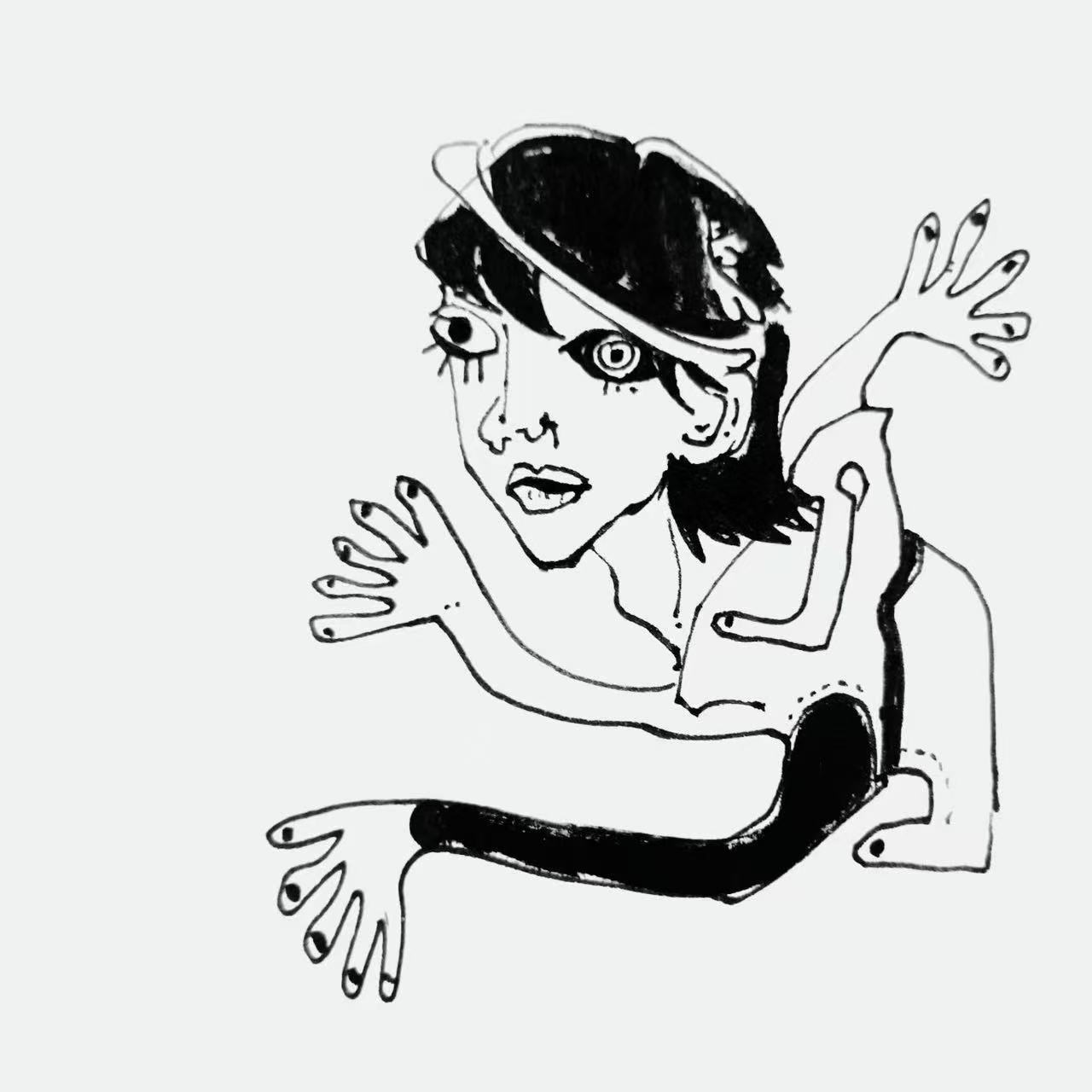
Sometimes I try to describe a feeling—countless skeletons; writers with hollow chests, wrapped tight in nothing but their own manuscripts, already weathered to ash. They dare not count on being remembered.
Thinking of this, I want to go home at once. I want to turn on my computer and carefully create a new folder—this time, not on the desktop. I will carefully give it an important name, something other than New Folder. I no longer trust distant cloud servers to keep my information. I no longer trust dumb computers. I know I will spill water on mine.
I set down their sentences and mine with care. Nothing special. Yes, I want to go home at once, even though I am already home. I only want, for a while, to fill myself with the desire to explore and to know, until I reach the edge of my comfort zone or the limits of what I know; after searching a few keywords, I will suddenly think of the past and then, dejected, go on inventing.
Italo Calvino seeks out the people and things in the inferno that are not inferno, learns to recognize them, makes them endure, gives them space. I try to knead together the signs carried by people I once met, shaping copies of them.
I think of the rambling, lyrical letters that recur in modernist novels. There is no longer room for such things in people’s minds. I hope there might still be room for these.
Wer jetzt kein Haus hat, baut sich keines mehr.
Wer jetzt allein ist, wird es lange bleiben,
wird wachen, lesen, lange Briefe schreiben
und wird in den Alleen hin und her
unruhig wandern, wenn die Blätter treiben.
Whoever has no house now will never build one.
Whoever is alone now will remain alone for a long time,
will stay awake, read, write long letters,
and wander restlessly up and down the avenues
when the leaves are drifting.